


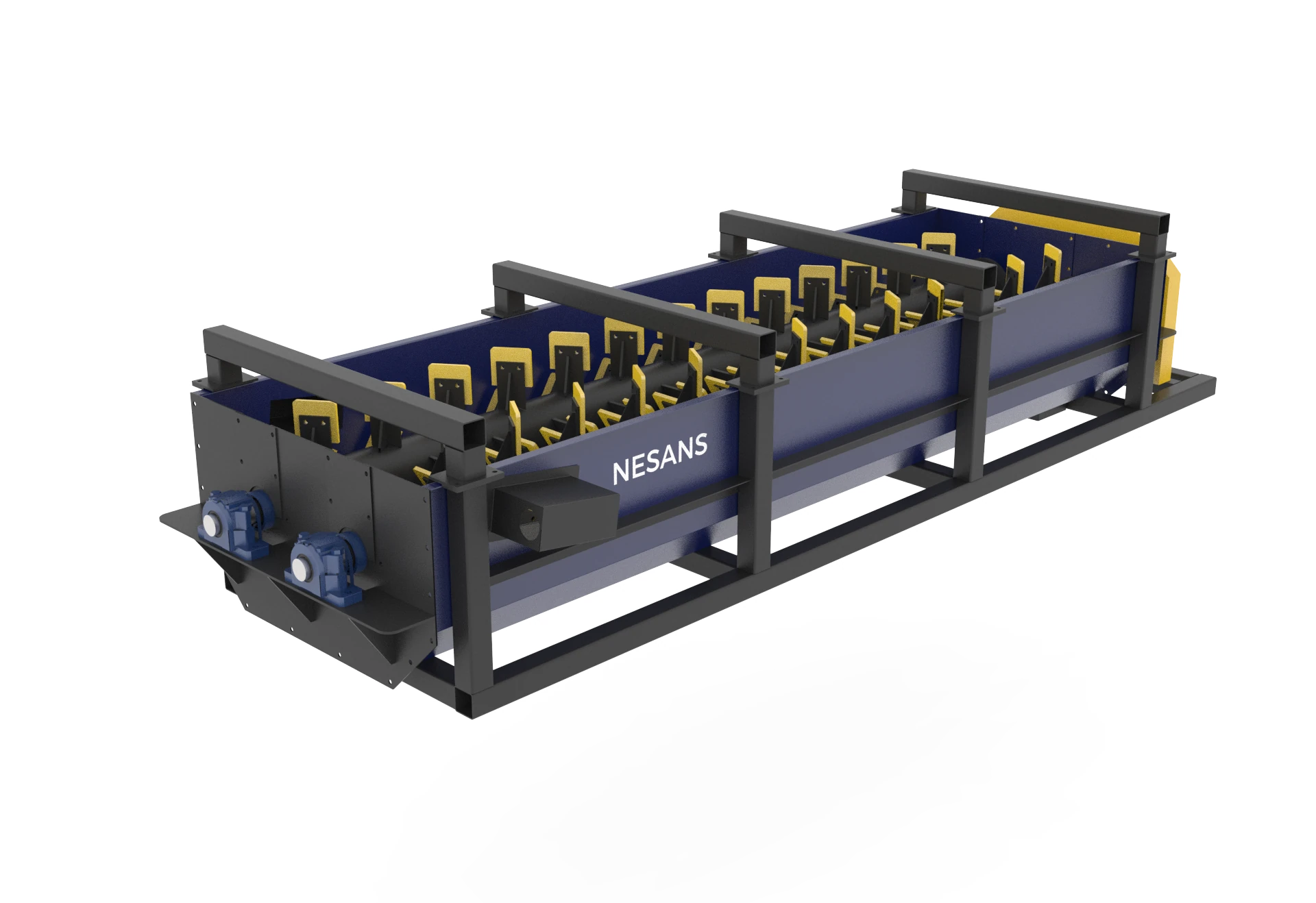


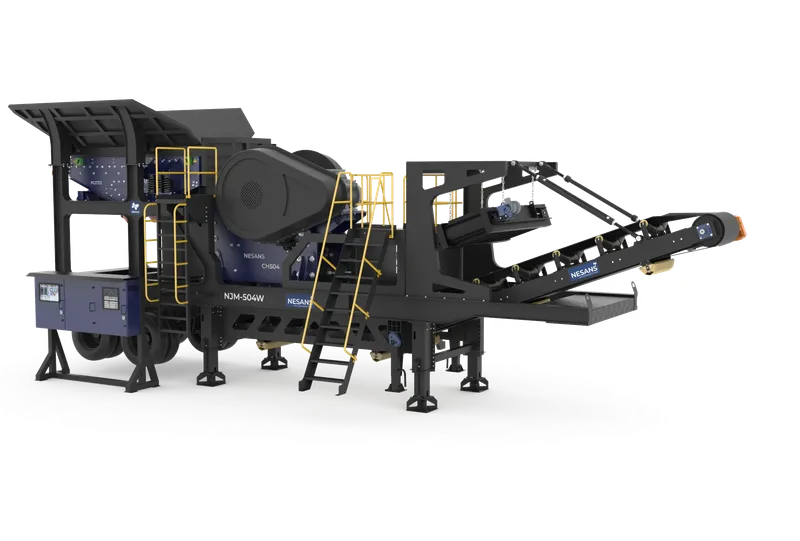
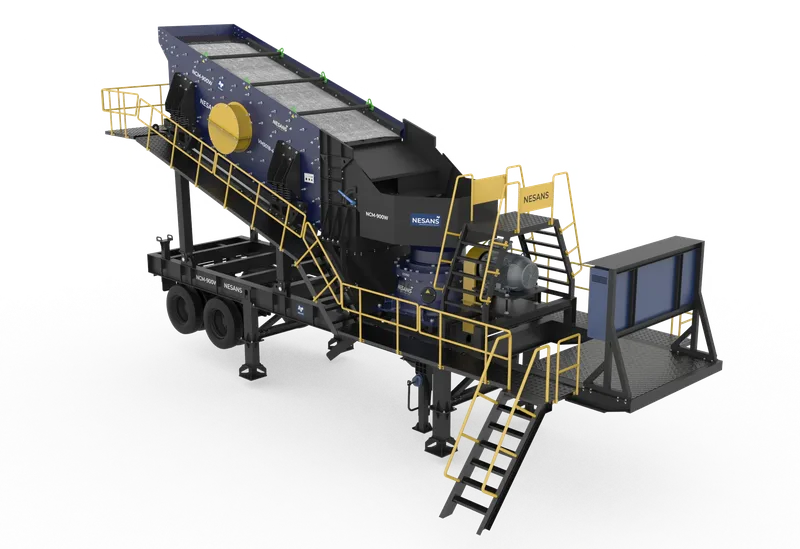
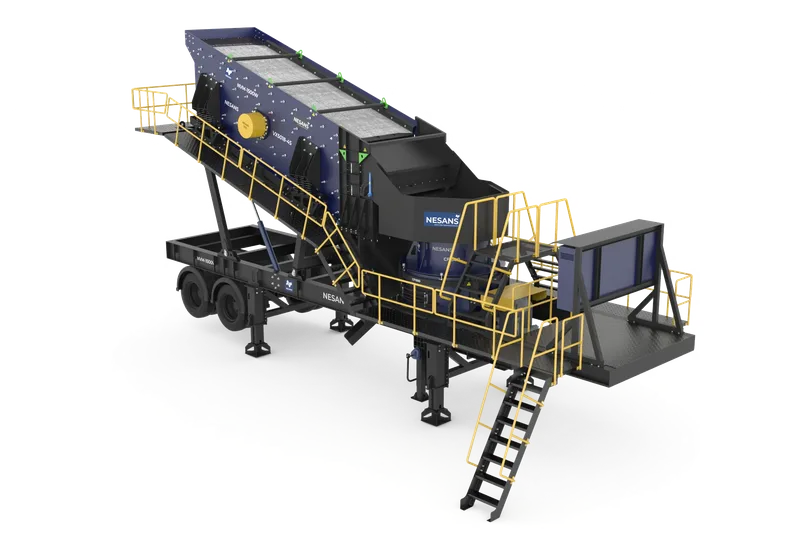


A vibrating screen is designed to shake — violently, millions of times a day. That is its job, and also its slow undoing. The side plates that carry the deck endure a relentless cyclic stress, and somewhere a tiny crack starts, grows unseen, and one day runs across a plate and writes off the machine. This is structural fatigue, and it is the defining failure mode of a vibrating screen.
This article explains how fatigue works, why it gives so little warning, and the design and maintenance disciplines that keep a screen’s structure alive for its full life.
Fatigue: failure below the breaking stress
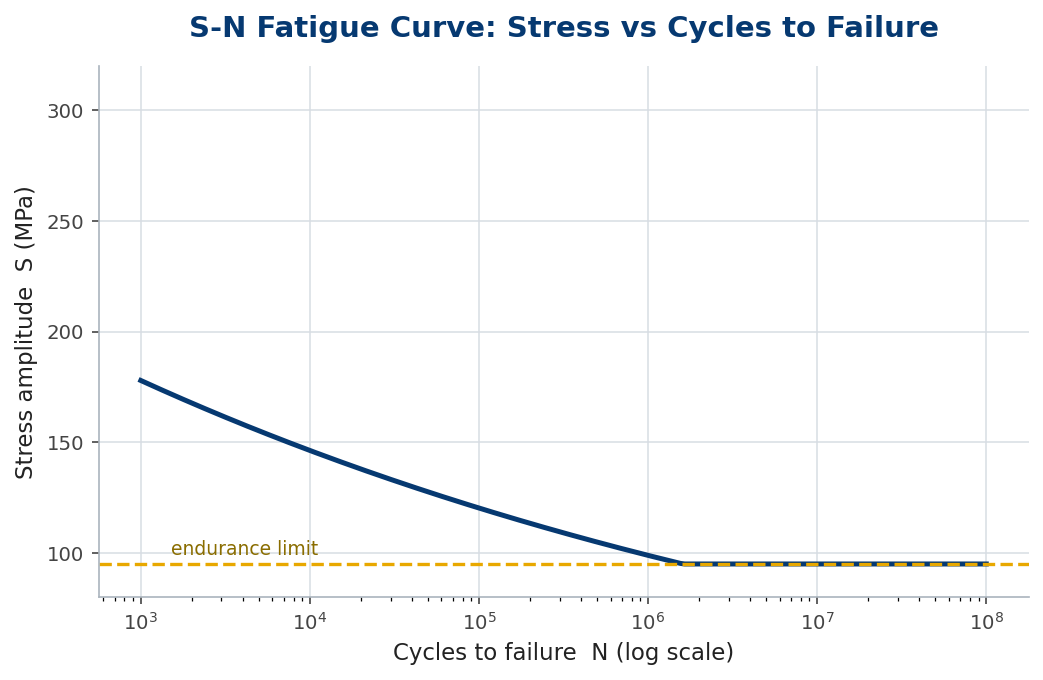
The unsettling thing about fatigue is that it happens at stresses far below the material’s strength. Repeated cycling at a modest stress amplitude initiates and grows a crack until the remaining section can no longer carry the load. The relationship between stress amplitude and the cycles a part survives is the S-N curve: lower stress, more cycles — and for steel, below an endurance limit, effectively infinite life.
Worked example 1 — how fast the cycles add up
A screen running at 900 rpm cycles its side plates  million times a day. In a month that is nearly 40 million cycles; in a year, close to half a billion. At that rate a structure has no margin for a stress that sits even slightly above the endurance limit — it will find its way to failure in months. The whole game is to keep the working stress safely under that limit, because the cycles are effectively unlimited.
Why it gives so little warning
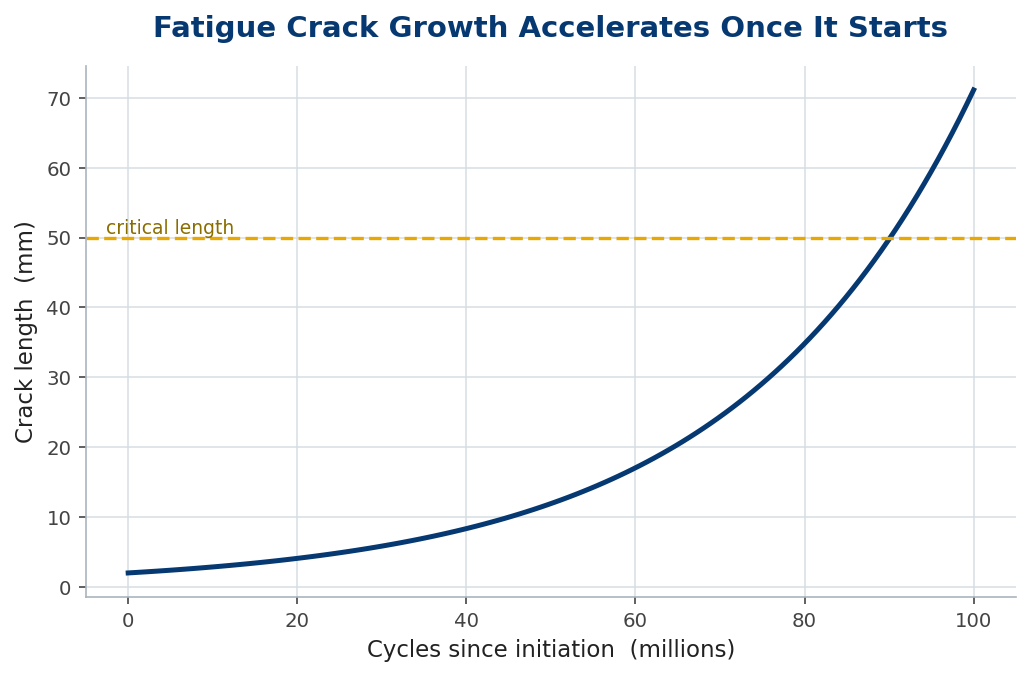
Fatigue life is mostly crack initiation; once a crack is visible, most of the life is already gone, and the final crack growth accelerates fast. That is why a screen can look fine on Friday and have a foot-long crack on Monday. The warning is subtle — a hairline at a stress raiser, a weld toe weeping rust, a change in the machine’s sound or stroke — and catching it early is the difference between a weld repair and a new screen.
Worked example 2 — the stress raiser that starts it
Cracks almost never start in clean plate; they start at stress raisers — a sharp corner, a tack weld, a bolt hole, a poorly ground weld toe, a gouge from a careless grinder. A field weld added to mount a bracket on a side plate is a classic killer: it injects a hard, brittle, stress-concentrating spot into a member designed for smooth flexing, and a crack initiates there within weeks. The discipline is to treat the side plates as sacred — no unauthorised welding, no drilling, no sharp notches — and to dress every necessary weld smooth. Most screen fatigue failures are self-inflicted in exactly this way.
| Factor | Effect on fatigue | Discipline |
|---|---|---|
| Stress raisers (welds, holes) | initiate cracks | no field welding; dress welds |
| Loose / missing bolts | raise local stress | torque check on schedule |
| Over-stroke / overload | raises stress amplitude | run to design stroke & load |
| Material build-up | adds mass, shifts dynamics | keep the screen clean |
| Corrosion | pits become initiators | protect and inspect |
In practice
Inspect the side plates, cross-members and welds on a schedule, looking for hairline cracks at every stress raiser — dye-penetrant or magnetic-particle checks find them before the eye can. Ban field welding and drilling on the dynamic structure; if a bracket is essential, it must be engineered, not improvised. Keep the bolts torqued (a loose connection dumps stress into the plate) and the screen clean (caked material adds mass and changes the dynamics). And run the screen at its design stroke and load — over-stroking to chase throughput raises the stress amplitude and marches the structure up the S-N curve toward early failure.
Common mistakes
- Field welding on side plates. It injects a stress raiser into a flexing member — a classic crack starter; never do it unengineered.
- Inspecting only when something looks wrong. Most life is gone by the time a crack is visible; inspect on a schedule with NDT.
- Over-stroking for throughput. Higher amplitude raises stress and shortens fatigue life sharply.
Cumulative damage and setting the inspection interval
Real screens do not run at one stress; they see a spectrum — normal operation, heavier loads when surged, the jolts of start-up and shut-down. Fatigue from a varying stress is estimated by Miner’s rule, which simply sums the damage from each stress level as the fraction of that level’s allowable life consumed:

where  is the number of cycles actually experienced at stress level
 and
 the cycles to failure at that level from the S-N curve. When the sum reaches one, the part is predicted to fail. The rule is approximate — real damage is not perfectly linear — but it captures the essential point: occasional high-stress events (over-stroke, overload, resonant start-up) consume disproportionate life because falls so steeply with stress.
That insight reshapes operation. Avoiding the rare severe events — not over-stroking, not running through resonance on start-up, not feeding shock loads — protects fatigue life far more than shaving the everyday stress, because a handful of high-stress cycles can dominate the damage sum. The cheapest fatigue management is often operational discipline, not heavier steel.
Miner’s rule also rationalises the inspection interval. Rather than inspecting on a calendar guess, you can estimate where the structure sits on its damage sum and inspect more frequently as it ages, concentrating non-destructive testing on the high-stress details — weld toes, corners, bolt holes — where cracks initiate. A risk-based interval, tied to accumulated damage and focused on the stress raisers, catches the crack in its long initiation phase rather than during its short, fast, terminal growth.
The bottom line
Vibrating-screen side plates fail by fatigue — cracks initiating at stress raisers under hundreds of millions of cycles, below the material’s strength. Keep the working stress under the endurance limit and avoid stress raisers, and the structure lasts indefinitely.
Ban field welding, inspect welds and plates on a schedule with NDT, keep bolts tight and the screen clean, and run to design stroke — and a machine built to shake itself apart instead runs its full design life.
Frequently asked questions
Why do screen side plates crack if they're below yield stress?
Fatigue: repeated cycling at modest stress initiates and grows a crack over millions of cycles, failing well below the material's static strength.
Why is there so little warning?
Most fatigue life is crack initiation; once a crack is visible most of the life is spent and final growth accelerates fast — so inspect before it shows.
Can I weld a bracket onto a screen side plate?
Not without engineering. Field welds are stress raisers on a flexing member and are a leading cause of fatigue cracks — avoid unauthorised welding entirely.
Key takeaways
- Side plates fail by fatigue — cracks at stress raisers under hundreds of millions of cycles.
- Keep working stress below the endurance limit and the structure lasts indefinitely.
- Stress raisers (field welds, holes, notches) start cracks — ban unengineered welding.
- Inspect welds and plates on a schedule with NDT; run to design stroke, not over-stroke.
