






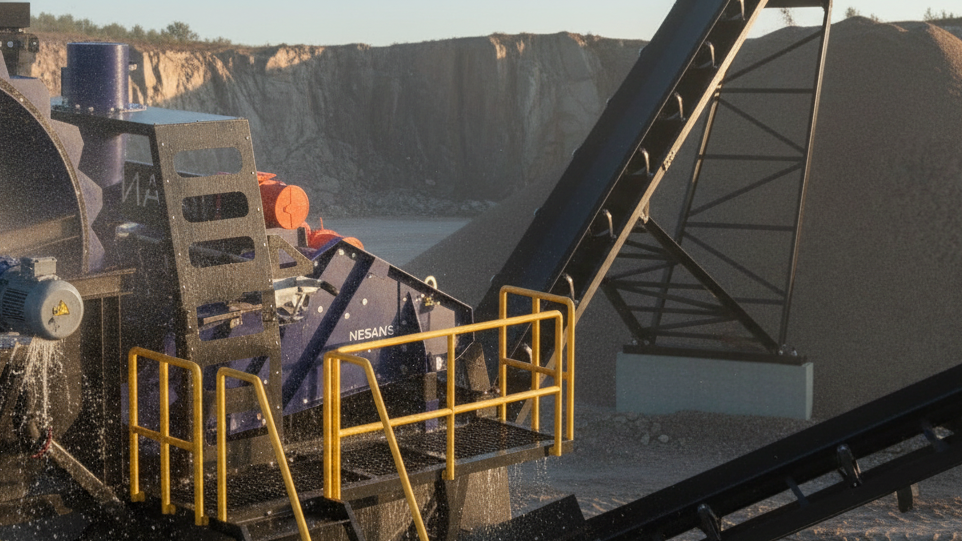
Fine sand recovery is critical for maximizing yield and profitability in sand washing operations. The 75-600 micron fraction represents valuable product that is often lost to tailings ponds when not properly recovered. Understanding fine sand recovery methods and optimizing equipment performance enables plant operators to capture this value while maintaining product quality.
Understanding Fine Sand Loss
Where Fine Sand Goes
In typical sand washing operations, fine sand can be lost at multiple points:
| Loss Point | Mechanism | Typical Loss |
|---|---|---|
| Log washer overflow | Fines suspended in wash water | 5-15% of feed |
| Screw washer overflow | Fines float over weir | 10-20% of feed |
| Dewatering screen underflow | Fines pass through screen | 3-8% of product |
| Hydrocyclone overflow | Intentional fines removal | Variable |
| Settling pond | Final destination of losses | Accumulated fines |
Economic Impact of Fine Sand Loss
Example loss calculation:
Feed rate: 150 TPH raw sand
Fines content (75-600μm): 25% = 37.5 TPH
Recovery without fine sand system: 60% = 22.5 TPH recovered
Fine sand loss: 15 TPH
Value: Rs 600/tonne (assuming M-sand grade)
Hourly loss: Rs 9,000
Annual loss (6,000 hours): Rs 5.4 crore

With fine sand recovery (95% efficiency):
Recovered: 14.25 TPH additional
Annual value: Rs 5.13 crore recovered
Fine Sand Recovery Methods
Hydrocyclone + Dewatering Screen
The most common fine sand recovery system:
System components:
- Collection sump for wash water
- Slurry pump to feed cyclones
- Hydrocyclone cluster for classification
- Dewatering screen for final product
- Return system for cyclone overflow
Process flow:
- Wash water collected in sump
- Pump delivers slurry to cyclone at pressure
- Cyclone separates fine sand (underflow) from ultrafines (overflow)
- Underflow dewatered on screen
- Product joins main sand stream
- Overflow returns to water circuit
Performance characteristics:
| Parameter | Typical Range | Optimization Target |
|---|---|---|
| Sand recovery (>75μm) | 85-95% | >90% |
| Product moisture | 12-18% | <15% |
| Cyclone cut point | 50-100μm | Match spec |
| Power consumption | 2-4 kWh/tonne | Minimize |
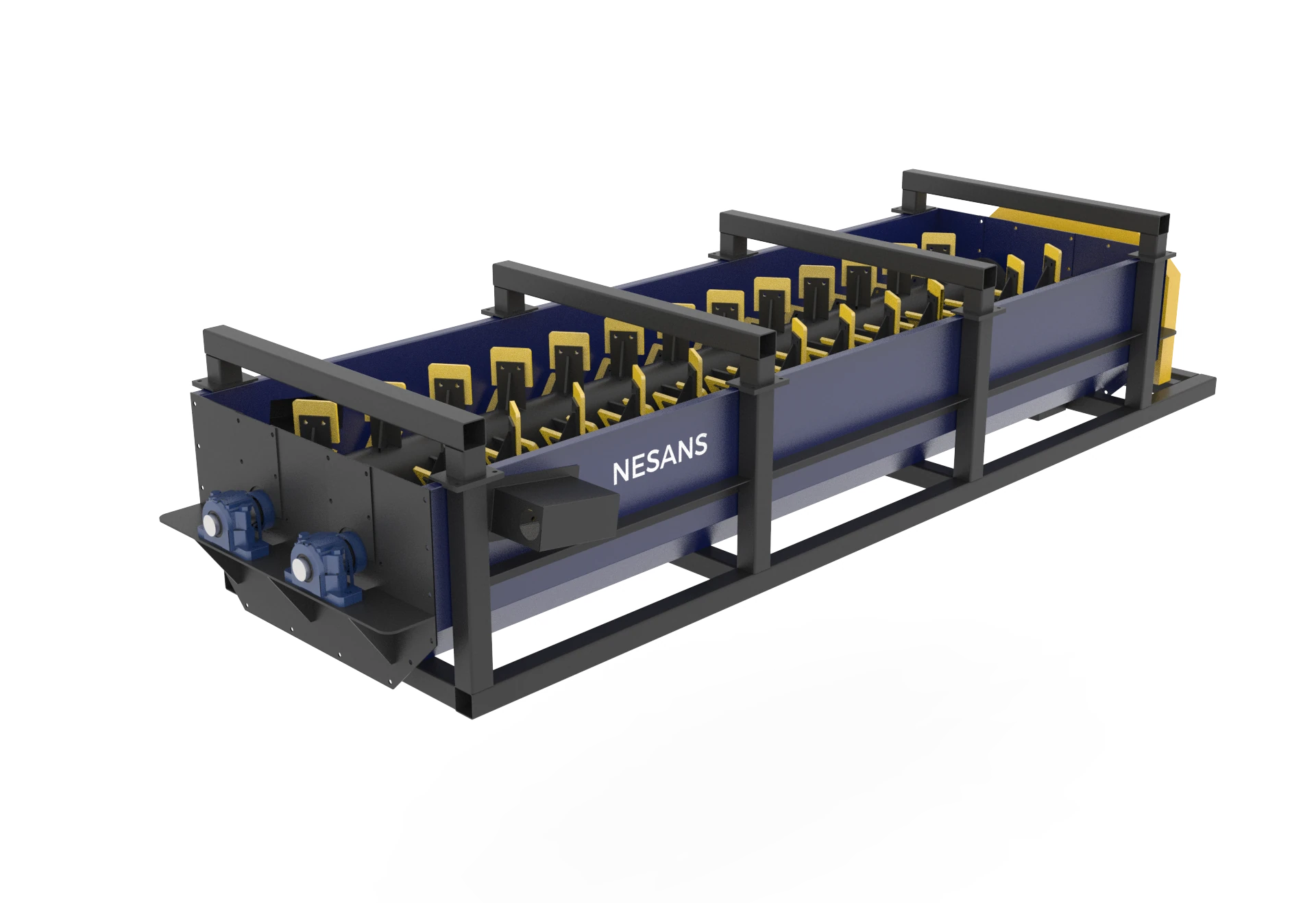
Fine Material Screw Washer
Alternative for lower-volume or simpler operations:
Operating principle:
- Inclined tank with screw conveyor
- Slurry fed to lower end
- Screw lifts settled material
- Fines overflow weir at low end
- Washed sand discharges at high end
Advantages:
- Simple operation
- Low maintenance
- Effective washing action
- Lower capital cost
Limitations:
- Lower recovery of finest fractions
- Higher moisture in product
- Limited capacity per unit
- Cut point less precise
Sand Classification Tank
Hindered settling classifier for fine sand recovery:
Operating principle:
- Upward water flow creates hindered settling zone
- Coarse particles settle against flow
- Fine particles carried out with overflow
- Product density controlled by water addition
Applications:
- Silica sand classification
- Industrial sand processing
- Where precise size separation required
System Design Considerations
Sizing the Collection Sump
Proper sump design ensures consistent cyclone feed:
Sump volume calculation:
Minimum retention time: 2-3 minutes
Flow rate: Total wash water + any recycle

Example:
Wash water: 200 m³/h
Retention time: 2.5 minutes
Volume needed: 200 × (2.5/60) = 8.3 m³
Add 25% margin: 10.5 m³ minimum

Practical considerations:
- Sufficient depth for pump suction
- Agitation to prevent settling
- Access for cleanout
- Level control system
Pump Selection
Slurry pump requirements for cyclone feed:
| Parameter | Consideration | Selection Guide |
|---|---|---|
| Flow rate | Match cyclone capacity | Design + 20% margin |
| Head | Cyclone pressure + pipe losses | Typically 25-40m TDH |
| Solids handling | Maximum particle size | Sand slurry duty |
| Wear life | Abrasive sand slurry | Hard metal or rubber lined |
| Control | Constant pressure desirable | VFD recommended |
Cyclone Sizing
Select cyclone size for target cut point and capacity:
| Cyclone Diameter | Typical d50 | Capacity Range | Application |
|---|---|---|---|
| 150mm (6") | 30-50μm | 20-40 m³/h | Ultrafines removal |
| 250mm (10") | 50-80μm | 50-100 m³/h | Fine sand recovery |
| 380mm (15") | 75-120μm | 120-200 m³/h | Coarse sand classification |
| 500mm (20") | 100-150μm | 200-350 m³/h | High capacity |
Dewatering Screen Sizing
Screen must handle cyclone underflow plus rinse water:
Dewatering screen sizing:
Feed rate = Cyclone underflow (solids + water)
Typical feed: 20-40% solids by weight
Specific capacity: 10-20 t/h/m² of screen area

Example:
Fine sand recovery: 40 TPH
Cyclone underflow density: 40% solids
Screen feed: 40/0.40 = 100 t/h total
Specific capacity: 15 t/h/m²
Required area: 40/15 = 2.7 m²
Select: 1.5m × 2.4m (3.6 m²) screen
Optimizing Recovery Performance
Cyclone Optimization
Key adjustments for maximum fine sand recovery:
| Objective | Adjustment | Trade-off |
|---|---|---|
| Increase sand recovery | Larger apex | More fines in product |
| Cleaner product | Smaller apex | Lower recovery |
| Finer cut point | Higher pressure, smaller cyclone | Higher power cost |
| Higher capacity | More cyclones in parallel | Higher capital cost |
Screen Optimization
Maximize dewatering while maintaining throughput:
- Media selection: Polyurethane panels with proper aperture
- Spray bars: Final rinse removes clinging fines
- Stroke adjustment: Higher stroke for better drainage
- Deck angle: Slight incline aids drainage
- Feed distribution: Even feed across full width
Performance Monitoring
Track these parameters to optimize recovery:
| Parameter | Measurement Method | Target |
|---|---|---|
| Overflow solids | Sample and filter | <5% of feed solids |
| Underflow density | Marcy scale or density gauge | 50-60% solids |
| Product moisture | Oven dry test | <15% |
| Product gradation | Sieve analysis | Meet specifications |
| Screen underflow | Collect and measure | <2% of product |
Water Circuit Integration
Closed Circuit Operation
Maximize water reuse while maintaining quality:
Water balance example:
Fresh water: 10% of total
Recycled water: 90% of total
Total consumption: 2-3 m³/tonne sand

Circuit components:
- Primary settling (coarse solids)
- Thickener (fines removal)
- Clear water pond
- Pump station back to plant
Managing Fines in Recycle Water
Ultrafines buildup affects product quality:
- Thickener: Remove fines before recycle
- Flocculant treatment: Accelerate settling
- Bleed stream: Purge portion of recycle
- Settling pond: Final polishing
Common Problems and Solutions
Problem: Low Recovery Rate
| Cause | Diagnosis | Solution |
|---|---|---|
| Cyclone cut too fine | Fine sand in overflow | Increase apex, reduce pressure |
| Feed density too low | Dilute underflow | Increase feed density |
| Screen losses | Fines in screen underflow | Check media condition |
| Pump issues | Variable pressure/flow | Check pump, VFD settings |
Problem: Poor Product Quality
| Cause | Diagnosis | Solution |
|---|---|---|
| Excess fines in product | High -75μm content | Reduce apex, increase pressure |
| High moisture | >18% moisture | Check screen, increase drainage time |
| Contamination | Clay or organic material | Improve upstream washing |
| Wrong gradation | Out of specification | Adjust cyclone cut point |
Problem: Equipment Wear
| Component | Wear Indicator | Action |
|---|---|---|
| Cyclone apex | Spray pattern change | Replace when 20% oversize |
| Pump impeller | Flow/pressure drop | Rebuild or replace pump |
| Screen panels | Holes, blinding | Replace worn panels |
| Piping | Thin spots, leaks | Replace worn sections |
Economic Analysis
System Cost Components
| Component | Typical Cost (Rs) |
|---|---|
| Collection sump | 3,00,000 - 5,00,000 |
| Slurry pump | 4,00,000 - 8,00,000 |
| Cyclone cluster (4-6) | 6,00,000 - 12,00,000 |
| Dewatering screen | 15,00,000 - 30,00,000 |
| Structure and installation | 8,00,000 - 15,00,000 |
| Total system | 36,00,000 - 70,00,000 |
Return on Investment
Investment recovery calculation:
System cost: Rs 50,00,000
Additional recovery: 15 TPH
Operating hours: 6,000/year
Annual recovery: 90,000 tonnes
Net value (after operating cost): Rs 400/tonne
Annual benefit: Rs 3.6 crore
Simple payback: ~2 months
Maintenance Requirements
Daily Checks
- Cyclone discharge pattern
- Screen drainage quality
- Pump pressure and flow
- Product moisture (visual)
- Any unusual noise or vibration
Weekly Maintenance
- Inspect cyclone apexes for wear
- Check screen panel condition
- Sample and analyze product
- Verify pump performance
- Clean sump of accumulated material
Monthly Maintenance
- Full cyclone inspection
- Pump wear assessment
- Screen motor and vibrator service
- Calibrate instruments
- Review performance trends
Fine sand recovery systems deliver exceptional returns on investment when properly designed and operated. Regular monitoring and maintenance ensure consistent performance, maximizing the capture of valuable fine sand that would otherwise be lost to tailings.
